
During the pandemic, Ellie, a student under a pseudonym, stares with boredom at the Zoom window on her Chromebook. As soon as the period ends, Ellie switches tabs to an online game. Without the accountability of a teacher that she would need to face in person, and with plentiful distractions close at hand, she finds it hard to focus on the schoolwork she’s supposed to be completing.
Now a junior at Lowell, Ellie has started to become engaged in schoolwork again, but still struggles with prioritizing academics as a lingering effect of pandemic-era restrictions. Ellie recalls that she didn’t feel the pressure to commit to her classes as a middle schooler during asynchronous learning. It was hard to take school seriously when it consisted of a teacher behind a screen, Ellie said, and she would neglect her homework for weeks at a time. In addition, having moved to a new school just before the start of the pandemic, Ellie felt socially isolated and struggled to interact positively with her peers in an online setting. Ellie is not the only high schooler who has experienced changes in their academic engagement since the pandemic, despite students having been back in the classroom since 2021.
Class engagement, including student participation, collaboration with peers, and attempts to understand and complete class material, has seen a significant decline in the years following the COVID-19 pandemic. Due to the intersection of multiple factors, students are less likely to participate in their classes, socialize with each other, or deeply engage with academic material.

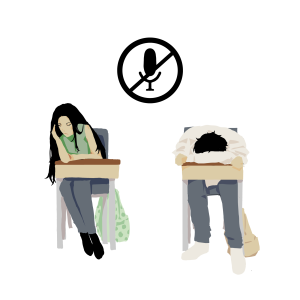
Although years have passed since the COVID-19 pandemic forced classrooms to move online, this educational period has had significant and lasting consequences for current high schoolers, causing harm to their attention spans and social interaction abilities. During the pandemic, students were unable to attend school in person, instead taking part in online classes from their homes. Unable to interact with friends and peers beyond online messaging, many students felt socially isolated, fueling disengagement in other areas of their lives, including school. E Although pandemic restrictions ended in 2021, effects of the pandemic are still visible in students’ social abilities – and as a result, in their engagement with their own education. Dr. John Burger is the co-author of the study Student Engagement—Pre and Post Covid-19 Pandemic. “Junior high-age students were the most affected by the pandemic,” he explained. “This cohort would be in high school now, [but] any longer-term effects may still be present to some degree.” According to Dr. Burger’s research, these effects included lowered self-confidence and decreased resilience to both internal and external challenges. His study notes that this is associated with lowered academic achievement. Students reflected this observation in a November 2025 survey conducted by The Lowell, with 54.2 percent of respondents saying a fear of judgment from peers held them back from participating in class. While a return to in-person learning has given students more experience in classroom environments, many current high schoolers still find themselves lagging socially and academically.
Social isolation experienced during the pandemic hindered the development of social skills for current high schoolers during the critical period of elementary to middle school, a trend that has visible effects on the social abilities of these students. “[During the pandemic], I didn’t talk to anybody at all,” Ellie admitted. She described experiencing social challenges as a result of transferring to a new elementary school just before the shutdowns started in March of 2020. “I didn’t make any friends to begin with,” she continued. “During the pandemic, [there] was no talking to anybody whatsoever.” Ellie is not alone; Colby Rogers, a senior at Lowell, also described experiencing limited social interactions with her existing friends after her school transitioned to remote learning. This trend is echoed by many other Lowell students as well; in a November 2025 survey conducted by The Lowell, which received 120 responses from students, 37 percent indicated that their degree of engagement with friends and peers during the pandemic was a one or a two on a scale from one to five, with one representing the lowest engagement and five representing the highest. Many students have recovered from this social disruption after the pandemic, with 63 percent of students responding to the November survey saying they believe the pandemic no longer affects their social skills. Still, the psychological effects have lingered for some. Avery, a senior under a pseudonym, admits the pandemic is still affecting the way they socialize., “My social development just plummeted straight into the ground,” they said. “Before the pandemic, I was way more open, and I could actually hold a proper conversation, but now? Talking to anybody honestly scares me.”
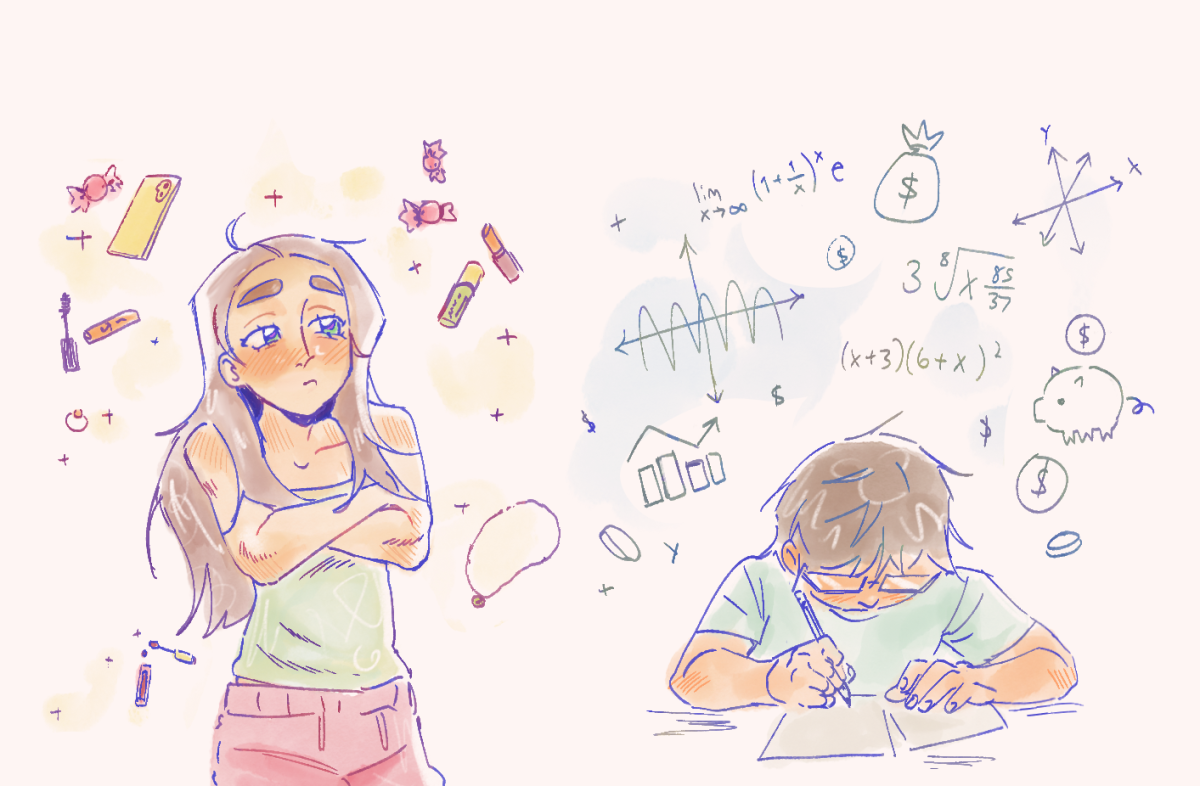
Teachers have also observed a lower amount of participation and class engagement from their high school students in the present as well. Social studies teacher Dina Yoshimura recalls the year students returned to in-person learning. “I think students became more and more attached and addicted [to their devices],” she said, ”I had a freshman that year that would play games that were really keeping them distracted, and I would catch them daily.” Students also observe themselves disengaging from the classroom through habits they picked up during the pandemic that prevent them from fully returning to school. Despite becoming accustomed to spending hours a day on devices, many students had trouble engaging with their education in an online setting. “Academically, I really just never paid attention [during the pandemic],” Avery said. They felt that nobody, not even their teachers, seemed to care much about online school.

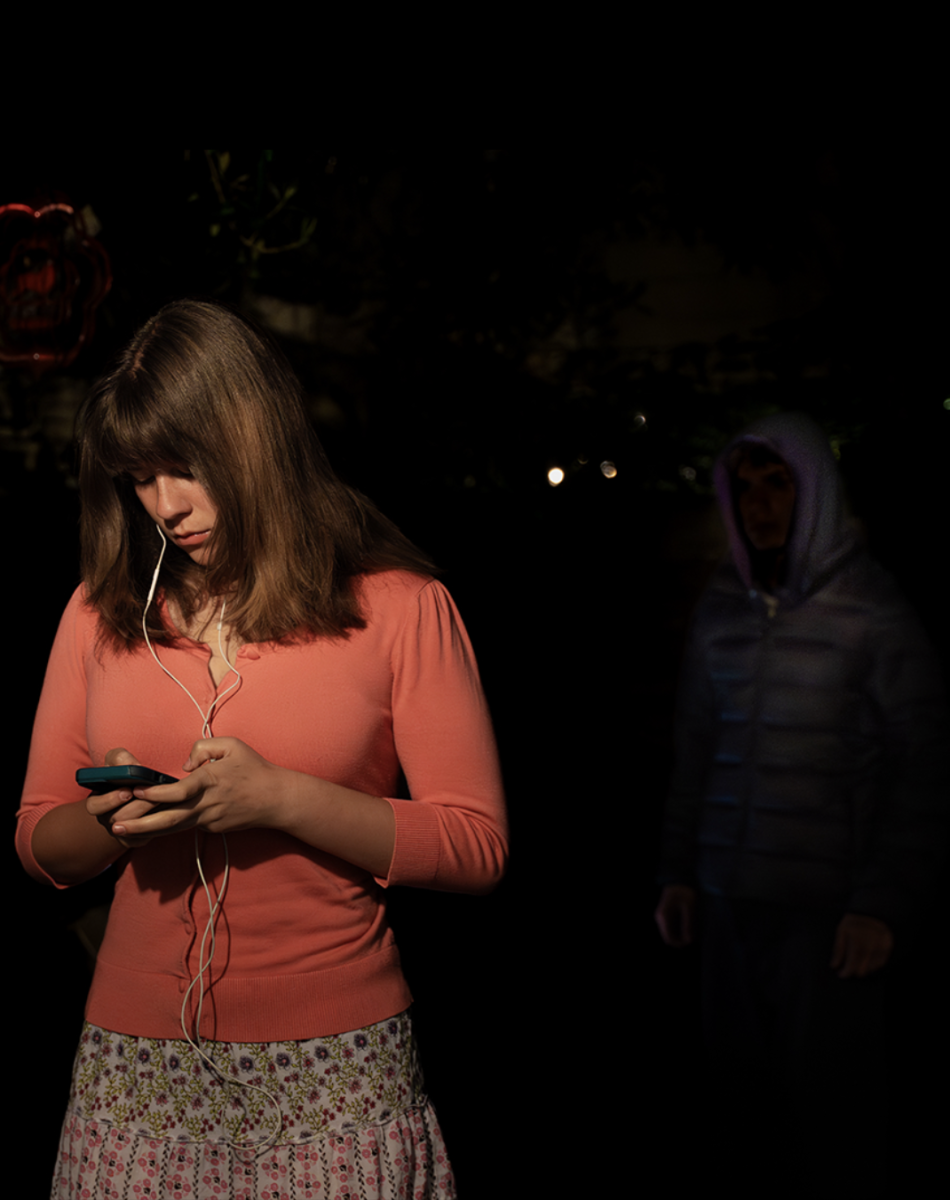
Now, the time spent online has made some students overly dependent on technology, making it difficult for them to focus on school in the present. “I’m pretty engaged for the most part, [but] I’m definitely less engaged now than I was in middle school, though.” Ellie said, ”I think the reliance on technology during the pandemic really stunted my attention span.” Students who adapted to the high level of technology use during isolation may find it more difficult to return to pre-pandemic levels. An anonymous respondent for the November survey said they got used to being on their devices during the pandemic, and now require their phone when there’s a lull in their day. “I know it’s a problem, and yet it’s like muscle memory,” the respondent said. For many students, knowing that something more engaging is a few clicks away can make it harder to concentrate on a subject they find dull.
Online education also made it easy for students to skip out on class, a trend that’s reflected in the return to in-person learning. Many students became accustomed to waking up just minutes before class started, or keeping their cameras off, and returning to strict bell schedules felt jarring. Chronic absenteeism is defined as missing 10 percent or more school days. After the pandemic, chronic absenteeism rates nearly doubled nationwide, jumping from 15 percent in 2019 to 28 percent in 2021. Despite rates of absenteeism slowing down, one in five SFUSD students was reported as chronically absent as of the 2025-2026 school year. Regularly missing class can be highly disruptive to a student’s education, as it creates gaps in content understanding that can be hard to retroactively address. In addition, students miss out on valuable socialization with peers and teachers. According to the Department of Education, a chronically absent high schooler is four times less likely to graduate. Students now have to dedicate more time to credit recovery and tutoring just to get back on track. Although chronic absenteeism has many intersecting causes, the exacerbations caused by the pandemic have also increased the severity of negative effects on high school students.
While students still face personal and academic challenges, many feel grateful for a return to in-person learning. Avery said that they find it easier to engage with teachers while attending classes in person. “It’s definitely different from the pandemic because I can actually talk to teachers properly about my work,” they said. “They can help me stay on track, whereas online, teachers could really only check the Google Doc history or something… and just hope that you did the work.” The purported benefits of student engagement associated with synchronous learning create hope that, as time progresses, students will be even more acclimated to the expectations of high school and beyond.
Though schools have been reopened for years since the pandemic shutdowns, the social and academic effects these closures have wrought on current high school students are still being observed. Every successive class of students has experienced a period of social isolation at a different time in their development and education, and will continue to display changes in their academic and social performance as a result. Additionally, it’s hard to make generalizations about the specific impact of the pandemic on students, which makes it equally hard to devise a single solution to help students recover from the setbacks associated with the pandemic. “A class has all kinds of personalities – different mixtures of kids, different voices,” Yoshimura said. She described her success with attempting to encourage high schoolers to reengage with her classes, but acknowledged that her experience may not be universal. “I have a lot of years of experience as a teacher – I can imagine that it might have been more challenging if you didn’t have as many tricks up your sleeve on how to engage and re-engage teenagers in interacting in person,” Yoshimura said. Despite the setbacks from the pandemic, she also remains hopeful for the future of her students. “In many ways, kids are very resilient. They bounce back, and I have worked with teenagers for 30 years,” Yoshimura says, “Teenagers are teenagers, regardless of the generation.”