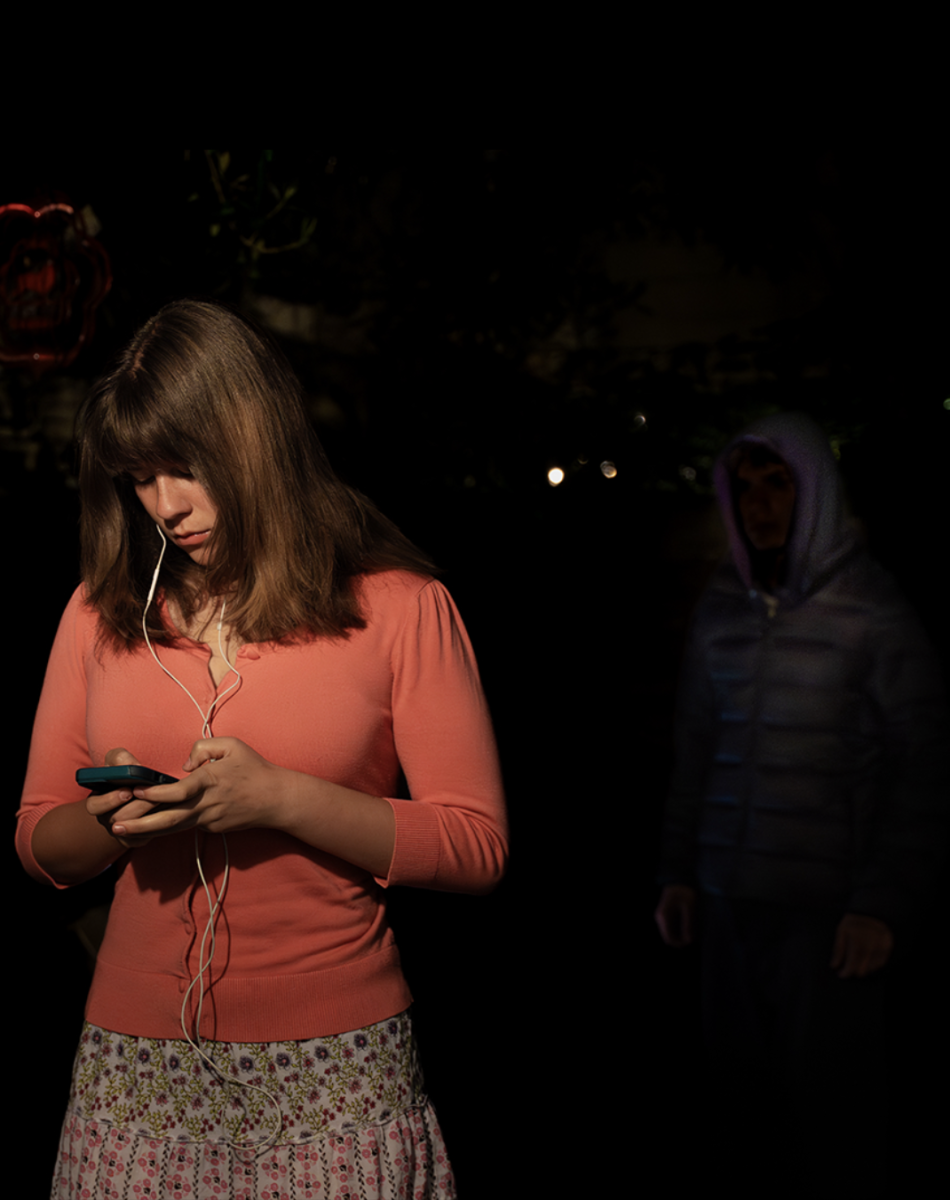

“Do you want to come to the store with me?” my mom asks. I had just woken up. I put on my shoes and followed her out the door, not giving a second thought to my appearance. Walking into the store, I catch a glimpse of my reflection and suddenly feel exposed. I wish I had taken the time to curl my eyelashes or put on a little bit of concealer, certain that all my insecurities were glaringly obvious to everyone at the store. The simple errand had triggered an unwelcome evaluation of my self worth, and I was confronted with the idea that my perception of myself was tied to my physical appearance. I realized I wasn’t wearing makeup for me, like I had been telling myself. It had become a crutch I relied on to feel good about my appearance. Before putting on makeup, girls should ask themselves why they feel the need to.

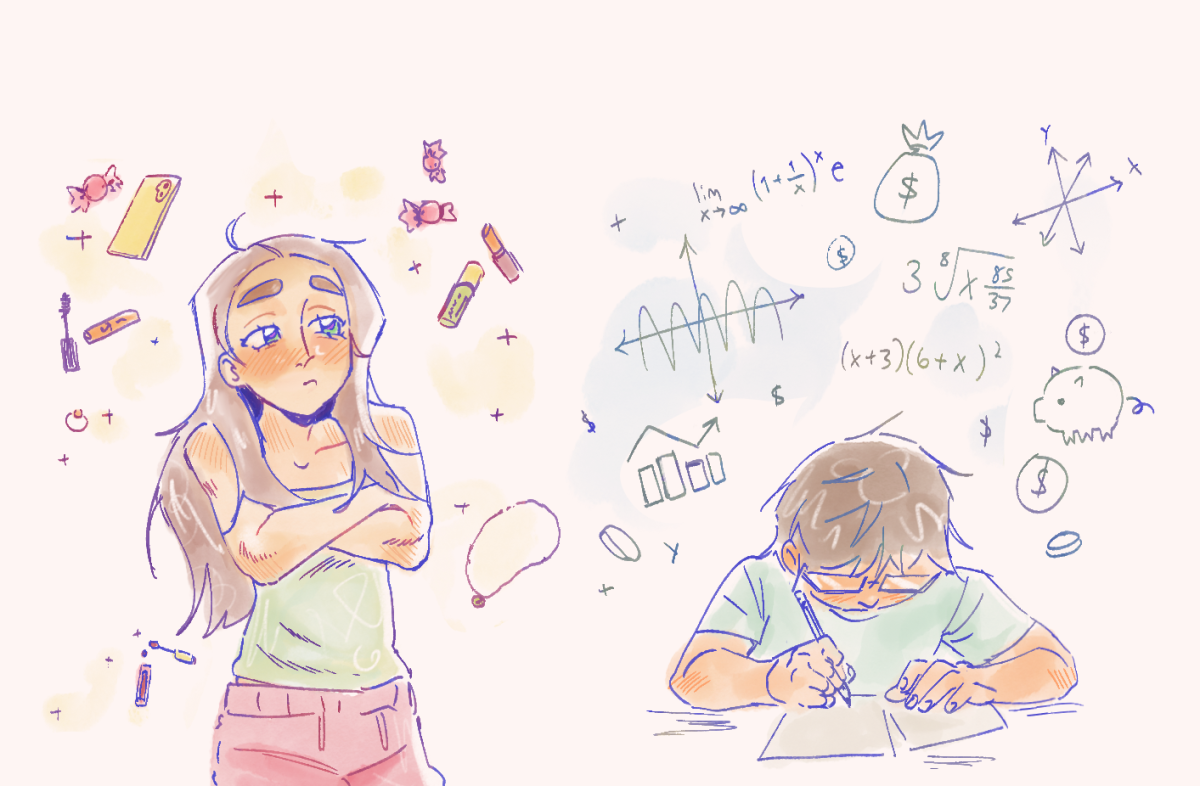
A large number of teen girls wear makeup. This in itself isn’t concerning. When you’re trying a new eyeshadow shade or asking your friend what lip product they’re wearing, makeup can be a fun and unifying act of femininity. However, putting on makeup often becomes a social expectation instead of an empowering practice. The reality is that in our society, women who don’t enhance their physical appearances with makeup or through other means are hardly ever accepted in the eyes of a male-centered world. This expectation is a difficult pressure to face for anyone, but especially for young women figuring out who they are in relation to these standards. High school is often considered the time for experimentation and identity formation. For many girls during this period, makeup is a significant part of discovering what they like and how they want to express themselves. However, when the only way to feel confident about your appearance is through the application of makeup, it becomes alarming. It’s important to find acceptance in yourself both with makeup, if you choose, and without.
Feminist movements have fought for freedom from these oppressive expectations. One branch that emerged from this is referred to as “choice feminism”. According to Jenna Crispin, author of the book Why I am Not a Feminist, choice feminism is defined as, “The belief that no matter what a woman chooses, from her lifestyle to her family dynamic to her pop culture consumption, she is making a feminist choice, just from the act of choosing anything.” This way of thinking can be appealing, especially when performing stereotypically feminine tasks. For the women who adhere to this ideology, putting on makeup is an inherently empowering act if it was your choice to do so. Instead of conforming to the stereotype, you’re reclaiming it. However, choice feminism fails to address the systemic influences that infiltrate everyday actions. In the case of wearing makeup, it glosses over the fact that women have long been held to unattainable standards of external beauty and instead praises the simple act of being able to choose something for yourself. This perspective does nothing to advance women’s interests and flattens the autonomy and complexity that women hold.
Makeup usage is often justified by the argument that makeup is a form of self-expression or art. Makeup artists like Pat Mcgrath, named one of the most influential people of 2019 by Time Magazine, have proven makeup really is a complex skill worthy of its recognition. However, it doesn’t hold true for everyone. For a while, I considered myself as practicing creativity through makeup like these artists, but it didn’t feel quite the same when I put on mascara in the morning because I wanted my eyelashes to look longer. I finally had to confront that I was not as free as I would have liked to say from the pressure of female beauty standards. Putting on makeup became more of an obligatory act – whether I wanted to acknowledge the expectations of the outside world or not. Once I realized this, I became conscious of how hard it was to stop wearing makeup. Knowing I can feel more confident in a couple of minutes makes not wearing makeup an active struggle. However, I know that choosing not to wear it when I would otherwise, reduces the reliance I have on makeup.
Makeup is a time-consuming and expensive practice that should not be considered the baseline for women’s beauty. It’s important to recognize how these pressures can seep into actions that are performed everyday. Confronting internalized misogyny is a good way to truly start advancing as a society instead of blanketing it with excuses and false empowerment. I should not have to spend 20 minutes putting on makeup every day in order to feel like I deserve to go outside. Girls should be allowed to exist as themselves, and the choice to wear makeup or not should be entirely theirs.