
“I’m just a girl!”
It was a comforting phrase, at first – a universal cheat code for escaping any feelings of shame around consumeristic tendencies and socially deemed “silly” uses of time. Thinking of leveling judgement against my compulsive shopping habits or Peet’s Coffee addiction? Don’t forget, I’m just a girl. It felt empowering: a way to reject the impossible standards and inescapable judgements of womanhood (cue the Barbie movie cognitive dissonance montage). It was a mantra, a pledge of individuality as much as a symbol of solidarity, a final assertion that we didn’t have to explain ourselves – for anything. I’m just a girl, you’re just a girl, we are all just girls.
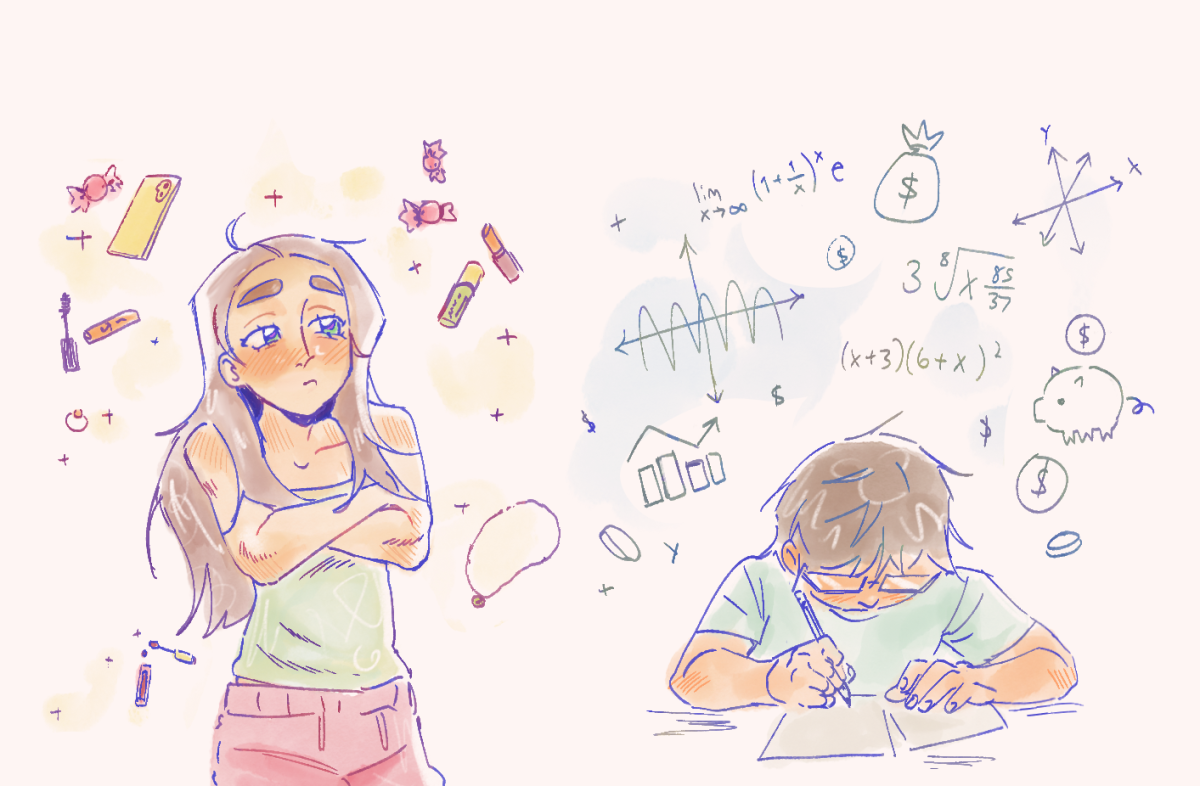
Then it started to become sinister. Suddenly, we were “just girls” when we failed our math test. “Just girls” when we got a degree in English (a girlish major, obviously) instead of finance. “Just girls” when we totaled our cars or maxed out our credit cards. We were just girls.
That’s all it took – for the emphasis to switch from “girl” to “just”. For “I’m” to turn to “you’re”. But the shifting use of this phrase didn’t deter social media users. Many women eagerly embraced this infantilizing attribution, finding comfort in relinquishing perceived autonomy. Trending videos and hashtags perpetuated a singular message: yes, we are more delicate than men. Yes, we are smaller. Yes, we are less capable – less culpable, by extension. The antifeminists had the green light. Pretty soon, people started expressing opinions that had clearly been simmering under the surface for a while. The phrase “go back to the kitchen” reawakened and unfurled its grotesque wings for the first time in a long time, and found itself right at home.
And conveniently, going back to the kitchen looks like a pretty great deal, at least online. Social media has exploded with apron-clad, modestly-dressed domestic warriors. Millions of users watched in morbid fascination as Nara Smith serenely assembled her favorite midnight snack (a “deconstructed salad”) or homemade Coca-Cola in an impeccably polished kitchen screaming of wealth. Public figures like Smith, an elite group steadily growing in number (often labeled “tradwives” by their audiences, whether or not they personally accept the label) do not engage in politics or social commentary. In fact, they give no indication of their connection to the outside world at all: their worlds are beautiful, rich, and alien, practically on a different planet. Amid this explosion of aestheticized domesticity came a concerning rise in antifeminist rhetoric. From the ever-present background noise of male podcasters griping about how women have single-handedly ruined dating, there came a troubling increase of fringe and radicalized new voices. Men who identify as a part of the “manosphere”, an online community that claims to understand the “truth” about gender roles in society, propagate troubling rhetoric calling for the removal of women’s rights at best, and violence at worst. The criticism doesn’t just come from men, though – more women online have emerged to complain about and condemn the indecency of feminism, advocating instead for returning to a traditional family structure and lifestyle. These influencers flaunt seemingly perfect lives, revealed through expertly colorcoded Instagram highlights. They are absolutely supported by their husbands (personally and financially), residing as modern queens, elegant rulers of the domestic sphere – a reality detached from the lives of many other women who are confined to housework out of necessity.
Yes, it is that serious. If you think women’s rights are so well cemented in American society as to be positively untouchable, you could use a reality check. In some states in America, women are forced to bear children conceived of rape, undergoing long term physical and emotional pain, permanently altering their bodies and lives as the outcome of a traumatic act of violence committed against them without their consent. The problem doesn’t lie in the individual choice to not pursue higher education, to get married young, or to work as a housewife. The problem lies in the promotion of this singular lifestyle, ignoring the massive loss of financial independence, social power, and autonomy that comes as a result of neglecting to accrue personal capital or skills suitable for the workforce. And if you think this social trend isn’t grounded in politics, think again. Popular conservative political organizations like Turning Point USA spend excessive money and resources promoting conservative lifestyles and family structure alongside advocacy for political ideals and figures who have repeatedly pushed the rights of women and minorities aside. At the same time, the rights of women in American society are quietly regressing, along with their representation in power. The newly coveted female aesthetic is clean, thin, blonde, and “chill” in a way that reads as patriarchal submission. Statements that would have previously seemed innocuous (“Sydney Sweeney is my favorite celebrity!”) have become dogwhistles for those with appalling takes on race, gender and society. Simultaneously, domestic labor and motherhood are being repackaged into capitalist fantasies of cottagecore milkmaid dresses and sad beige nurseries. Any form of household labor that falls outside of this Instagram paradise is plainly ignored by the vocal antifeminists; the uncertainty that comes with unemployment for many women is discarded. And a plethora of online trends and viral videos (see, “coloring while he does his big boy work!”) are working overtime to convince the masses that this is normal, or worse, cute.
As high schoolers, we may not be thinking about our future marriages, households, or families. But we are considering our next steps, including education and career paths – and in our current society, we are already facing subtle messaging about the lesser importance of women’s education and career training, along with the myths of lesser intelligence, strength, and logic that have persisted for millenia. It’s important not to take for granted the many rights that have been hard-fought and won for us over the years – the ones that allow us to choose whether to have a career, or be a housewife, on our own terms. We must acknowledge the struggle that has led to this current state, and the active threats to our rights as women, or those rights will be taken away before our eyes.