
As junior Bailey Gee turned on the faucet in his middle school bathroom, he heard snickers behind him. The other boys in the bathroom were speaking in hushed tones, but their voices were not low enough to be unheard by Gee. “Is there a woman in here?” one of them yelled. “No, it’s just a ‘transgender’,” the other responded. Anger and fear washed over Gee as he left the bathroom without saying a word.
Transgender and genderqueer individuals face a divided political and social landscape that can be difficult and dangerous to traverse; a convoluted mess of opinions that range from staunch advocacy to deep hatred. In America, trans youth are tasked with navigating the hostility of their country’s politics alongside the inherent obstacles of growing up and discovering, formulating, and thriving in their gender identity. According to a survey conducted by The Lowell in April 2026 of 172 students, 15 respondents (about nine percent) identify as something other than their assigned sex at birth (cisgender), and 37 (about 22 percent) have questioned their gender identity at some point. The transgender and genderqueer population at Lowell, and throughout the world, face a unique set of challenges as they strive for gender euphoria or neutrality in a society rigidly defined by binaries.
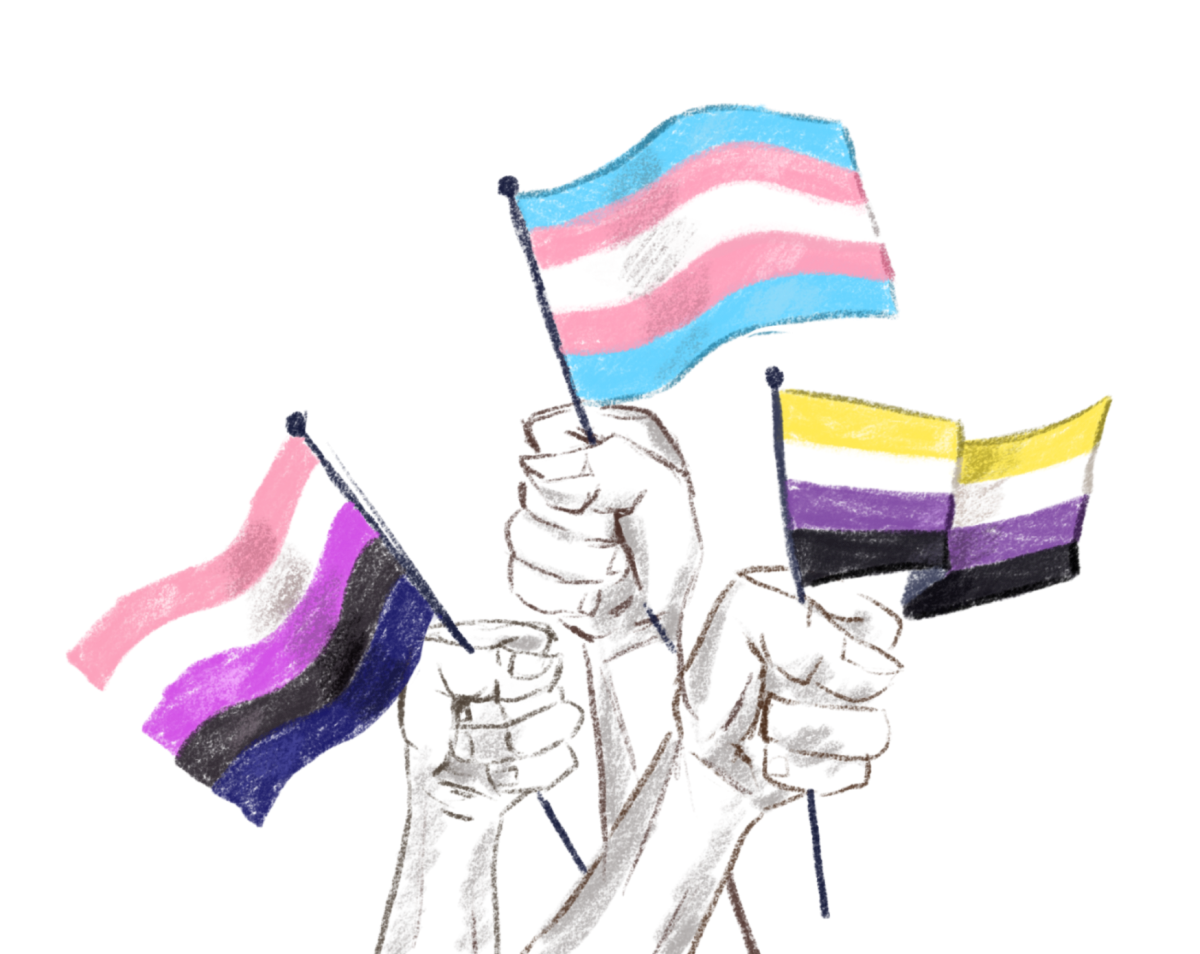
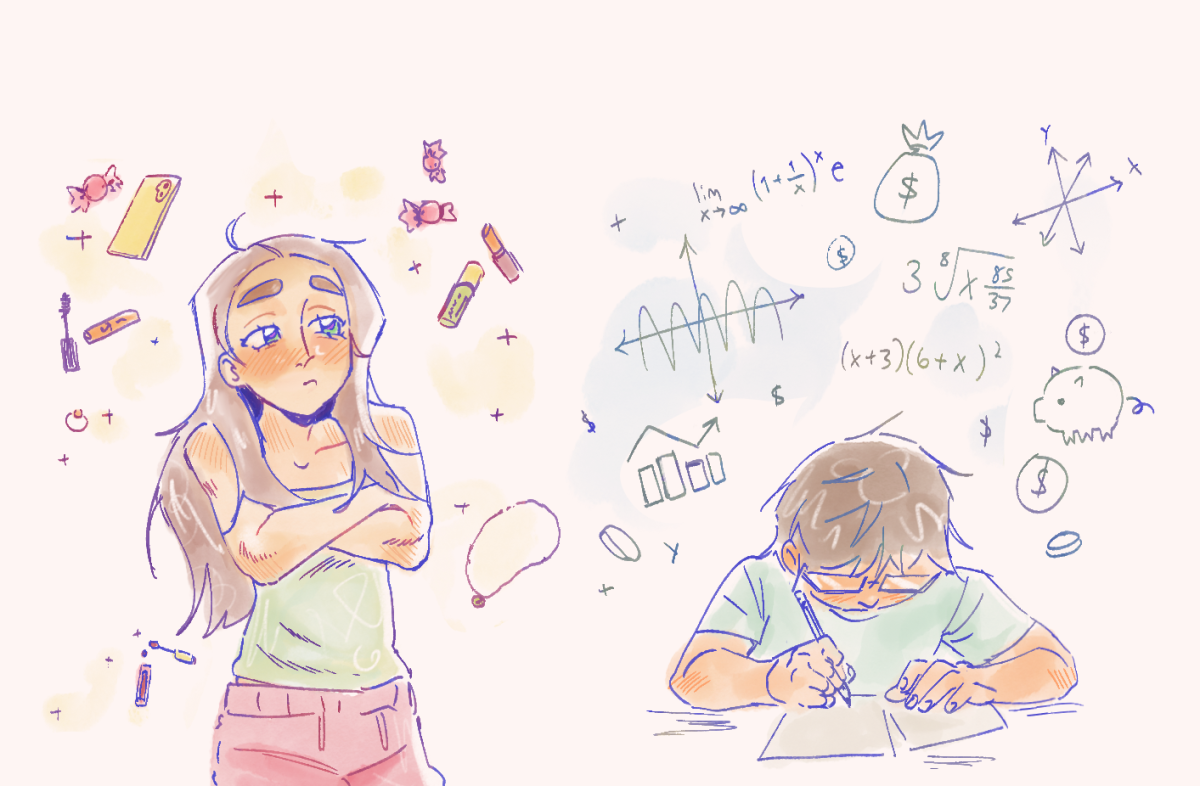
The majority of transgender individuals begin to question their gender identity in early-to-mid childhood. According to the National Library of Medicine, more than 70 percent of these individuals first experience gender dysphoria between the ages of three and seven. Annette Brömdal, an Australian researcher on gender and sexuality in sports, medicine, and school environments, described gender dysphoria as the inner turmoil that arises when one’s gender identity and assigned sex and/or physical characteristics do not line up. Brömdal explained that family gender dynamics, gendered toys and gifts, and emerging gender vocabulary beyond simply “girl” or “boy” all play a role in prompting children to begin exploring their own gender identity—whether or not it is encouraged by these experiences. Cecilia Mills, a junior at Lowell, described the discomfort she began to feel in her body in seventh grade, and her love for traditionally “girlish” activities. “I started feeling more and more uncomfortable in my own body and in the way that people tended to perceive me,” Mills said. “I guess, looking back on it, I always liked growing out my hair and painting my nails…eventually, I realized that maybe there was a reason for that.”
The development of secondary sex characteristics like breast tissue, menstrual cycles, or voice deepening can be upsetting for trans adolescents and trigger gender dysphoria. Like Mills, junior Will Lohf began to feel ostracised from his female friends when they all began to go through puberty. “I sort of lost all my friends,” Lohf said. “I didn’t like what they were doing anymore.” The physical changes that accompany puberty, like the development of breasts, can make individuals appear less androgynous than before puberty. As these physical characteristics develop, the disconnect between how transgender individuals feel about their gender identity and how their body is perceived by society can intensify and lead to body dysmorphia, an obsession or skewed perception of one’s shape and size. For some transgender individuals, body dysmorphia can result in an eating disorder. According to an article published by The Emily Program titled Why Transgender People Face Higher Risks of Eating Disorders, nine in ten transgender and non-binary youth experience dissatisfaction with their body, one in five will develop an eating disorder, and 88 percent attribute their body dysmorphia to the mismatch between their gender identity and the sex they were assigned at birth. Eating disorders in trans youth are typically restrictive, such as anorexia nervosa, and develop to cope with their feelings of gender and body dysmorphia.
Lohf had struggled with anorexia stemming from his gender dysmorphia and wasn’t able to participate in some P.E. classes during his freshman year because of his condition. In order to safely start testosterone, he had to recover from his eating disorder. After overcoming anorexia, Lohf began hormone therapy and says that its effects have greatly improved his mental health. “I’ve been on testosterone for two years now, and it’s lifesaving,” Lohf said. Hormone Replacement Therapy (HRT) is a common treatment option for many transgender individuals experiencing gender dysphoria. HRT affects gender-associated physical characteristics through the administration of specific hormones, particularly testosterone, estrogen, and antiestrogen,
which suppresses estrogen production in the body. HRT is largely irreversible and can be a vital tool in mitigating the mental health issues that accompany gender dysphoria, Brömdal explained. But methods of intervention for gender dysphoria like HRT and gender affirming surgeries have created uproar between its supporters and opponents. For example, the Save Adolescents From Experimentation (SAFE) Act passed by the Arkansas legislature in 2021 banned healthcare providers from giving trans minors hormone therapy or gender affirming surgeries. For Lohf, outcries like these against services for transgender children are wildly sensationalized and oblivious to the help that gender affirming care provides. “Everyone’s got hormones in their body already, adding a bit more of one is not a big deal like everyone seems to think it is,” Lohf said.
In 2026, 27 states in the U.S. have banned gender affirming surgeries such as subcutaneous mastectomy (or “top surgery” to remove breast tissue), or genital reconstruction surgery. 50 percent of transgender youth in the country live in a state that does not allow gender reassignment surgery, according to the Kaiser Family Foundation. These states include the American south and many areas of the midwest, excluding Michigan, Illinois, Minnesota, and Wisconsin. Gender affirming surgeries for trans youth remain a controversial method of treating gender dysphoria, and those in opposition to it tend to cite the irreversibility of the procedures and the possibility that the trans adolescents receiving them will regret it later in life. Physicians and psychiatrists who give the go-ahead for gender affirming surgeries for minors may also fear legal persecution if the minor dislikes the surgery at a later time, Brömdal stated. But these surgeries can also be life-saving. Brömdal explained that the cognitive dissonance between mind and body in transgender and genderqueer individuals can lead to suicidal ideation and pose a significant threat to their wellbeing. Lohf, who will be getting top surgery after five years of ideation, therapy, and consultation, echoed the impact that HRT and gender affirming surgeries have on trans youth. “I know kids who have tried to commit suicide or have had suicidal thoughts because of gender dysphoria,” Lohf said. While temporary fixes like chest binders have been somewhat helpful for Lohf, they’re tight and uncomfortable, and because they cannot be exercised in, Lohf must go without them when he bikes to school. Avery Kim, a senior who identifies as genderfluid, believes that choosing to undergo gender affirming surgery can be life-changing, and recommends that individuals who are secure in their gender identity and wanting gender affirming surgery do so. “If you feel like [you’re] secure in how [you] identify, then go for it. You will most likely never regret it,” Kim said. Like Lohf, Kim has been contemplating gender affirming surgery for half a decade. A 2018 study by Cornell University found that less than one percent of transgender individuals who receive gender affirming surgery regret it. Despite low regret-rates, Brömdal expressed that surgeries for transgender individuals under 18 are more complicated. “[Restrictions on gender affirming surgeries have] been about protecting the potential child prior to being necessarily mature enough,” Brömdal said. “What I would suggest is that there needs to be much more research in this area…in order to better understand what young people want and need.”
Like all children, trans kids’ lives are often greatly influenced by the acceptance or rejection of their identity by their parents. Brömdal explained that the parents’ reaction to their trans kid as they explore their gender is crucial for determining how, or if, they explore it further. “If [the parent’s reaction] is policed and if it is punitive, then [the child] will start policing themselves and internalize it,” Brömdal said. Self-hatred, gender dysphoria, and other mental health concerns are more likely to arise in transgender youth who experience adolescence without a supportive household, and these feelings often follow them into adulthood as a result. Some transgender youth never attempt to come out to their family and instead keep their identities a secret. A 2020 study by PubMed revealed that nearly half of the surveyed respondents intentionally avoided disclosing their gender identity to their families. “Young people are a vulnerable group,” Brömdal said. “They are living at home, they don’t necessarily have financial independence…They are really dependent on adults to care for them.” A 2026 survey conducted by The Lowell found that eight out of 17 (47 percent) of transgender, nonbinary, or genderqueer respondents have kept their gender identity hidden from their family members. The inherent vulnerability of adolescent development, fear of rejection, and dependence on parents can influence trans youth to suppress their gender identity in order to maintain stability in their home.
Kim described an intense argument with her mother regarding their genderfluid identity. Kim’s mother lost her temper and screamed at Kim when she caught them looking at photos of the transgender flag. “I [told her]…‘I think I might be trans.’ And then she went ballistic,” Kim said. Kim’s mother expressed concerns about how her church friends would view Kim’s gender identity, and how it would taint her own reputation. The argument and two-day silent treatment that followed left Kim feeling depressed and suicidal — a bleakness that was amplified by distance learning. Without face-to-face connection with their friends who Kim noted were supportive, Kim started to feel even more like an outsider. “I [felt] really isolated. I [didn’t] feel like I truly belonged anywhere,” Kim said. “I never tried to come out again because obviously I didn’t want to deal with that.”
Kim also reflected that their mother’s ethnicity and cultural background played a significant role in her reaction to Kim’s gender identity. Their mother grew up in conservative, post-Korean-war Pusan, South Korea. Transgender individuals were largely invisible throughout the world before the early 2000s, and non-binary gender identities remain unrecognized in Asian countries like South Korea, Japan, and China. “I feel like in a lot of Asian households you say something, then your parents go ballistic about it. They make it all about themselves and then you’re just sort of [thinking]: it wasn’t about you in the first place,” Kim said. Quinn, a senior under a pseudonym who identifies as unlabeled, experiences a similar cultural dissonance within the Black community and feels as though unconventional gender expression is less acceptable among its members. “[I] feel very out of place with other people, especially being Black. You do feel like you’re a little bit out of place within your own community,” Quinn admitted. Gee noticed that the majority of the members in Lowell’s Gender and Sexuality Alliance (GSA) are white, and while the organization is uplifting for many LGBTQ+ students, it lacks representation. “Sometimes I feel a little alone because I haven’t met another trans person that’s the same ethnicity as me,” Gee said.
On the other hand, parental and communal support is associated with a greater life satisfaction for trans youth. Resources at Lowell like the GSA, wellness center, and gender neutral changing room aim to foster an accepting environment for LGBTQ+ students and promote their wellbeing. Seeking advice on gender-affirmative action like hormone therapy, Kim sought out the wellness center staff who provided them with referrals to potential care options. Like Kim, Mills used services offered through the wellness center (often in collaboration with the GSA), and met many of her now-close friends through the GSA during her freshman year. According to Mills, having these resources is essential and not always common in schools across America. “We live in a world that’s a lot of times unfriendly to trans people and queer people in general,” Mills said. “But I [have] a lot of friends who [are] trans or queer and they’ve helped me through it.”
However, Lowell has, in some ways, fallen short on the amount of care and accessibility that it could be providing to its trans community, Mills said. The largely gendered bathrooms and changing rooms can make necessities like using the restroom extra cumbersome to non-cis students. While gender neutral bathrooms exist throughout the school, the majority are locked. Mills explained that the locked restrooms can be opened with keys located in each department office, but they often get misplaced and are unavailable for students who feel more comfortable using the gender neutral bathrooms. “That makes it a lot more difficult for trans people to access the restrooms when only one or two of the department offices actually have the keys for them,” Mills said. Kim corroborated this, saying that it takes courage to feel comfortable walking to an office, grabbing a key, using the restroom, locking it, and returning the key when more bathrooms could simply remain unlocked.
Beyond the Lowell campus, the challenges facing transgender people are exacerbated by a growing number of legislative efforts to curtail their rights. Currently, the Trump administration has presented 767 anti-trans bills across 43 states; 669 of these bills are active and 34 have passed, according to the Trans Legislation Tracker. The majority of these bills target education, said Brömdal. They aim to deny students the right to have their chosen name and pronouns respected, forcibly out them to parents or guardians, and limit education on topics like gender diversity and identity. Mills explained that she has been receiving hormone therapy since October, but isn’t sure if the federal government will cut off funding for the clinic. She explained that the openly hostile environment towards trans people in the country and lack of resources for them often makes it extra challenging to navigate her day. “it’s just very difficult to even just go about my daily life a lot of the time,” Mills said. Like M
ills, Quinn feels that America scapegoats transgender, nonbinary, and genderqueer people to distract from greater issues by targeting a group that they see as vulnerable and different. “A lot of [trans and gender queer] people became more visible in society and I think as a result a lot of people cannot cope with that change because it is something that they cannot understand, or choose not to
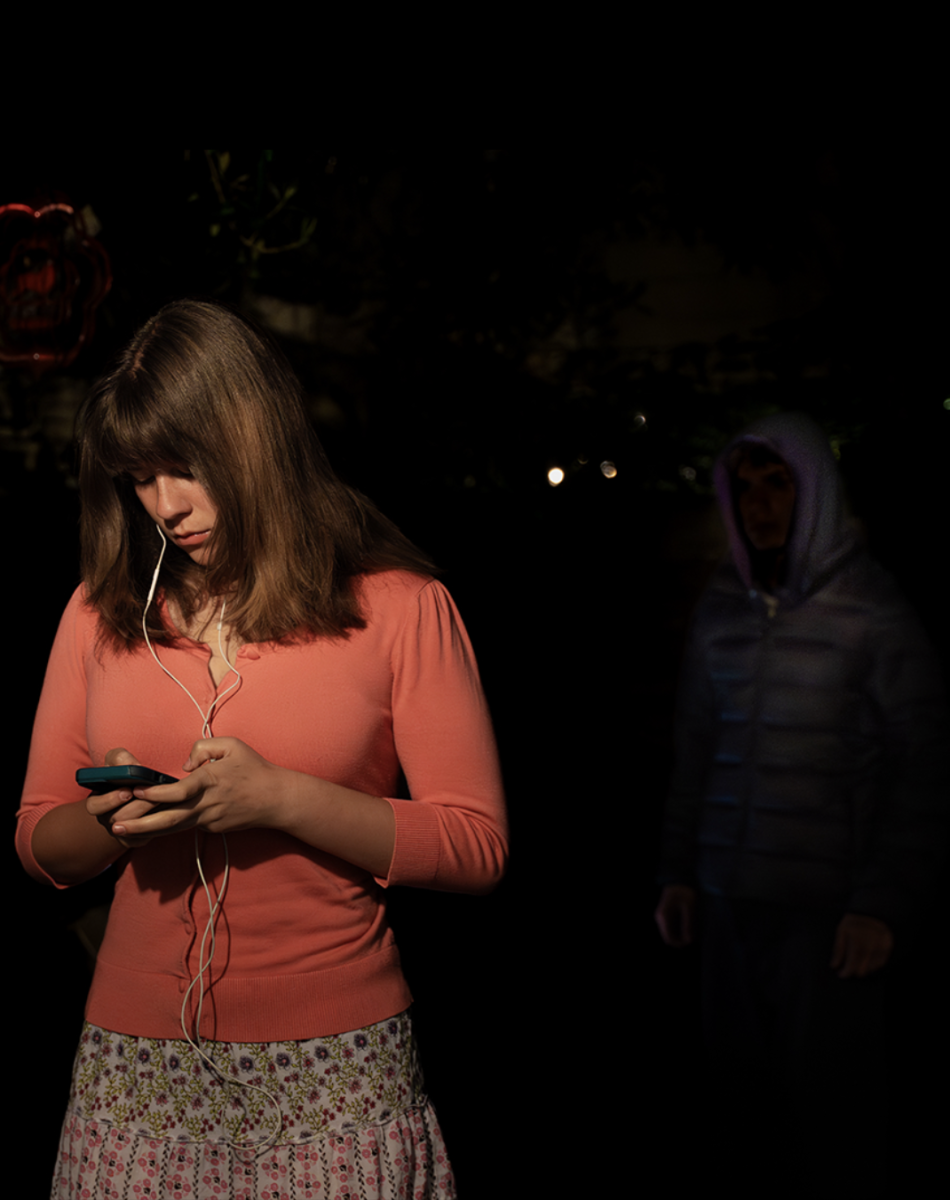
understand,” Quinn said. Trump’s attacks on transgender people include banning transgender adults from serving in the military, banning transgender athletes from participating in sports (particularly transgender women on women’s sports teams), and directing gender affirming care facilities to cease surgeries on trans individuals under 19 while simultaneously modifying the Affordable Care Act to restrict funding from Medicaid in covering the cost of surgeries. Brömdal described the vital role the government plays in allowing resources that care for trans people to be maintained and made accessible across the country. Without it, those seeking such care becomes tedious; in extreme cases, it becomes dangerous. “It’s [as if] someone who has been diagnosed with cancer is refused treatment and is left to deal with it. No support, no recognition, no affirmation,” Brömdal said. “Tough is what it is right now. Very tough. That’s why allies need to be louder…because there’s so much hate and anti-trans sentiment, it’s hard to know who to trust.”
The quest for contentment and self-love is a cornerstone of adolescence, and carries into adulthood as we change, mature, and grow into ourselves. For transgender and genderqueer youth, this pursuit is hindered by society’s rigid binaries. But gender euphoria, the feeling of comfort and happiness in one’s own gender and body, is possible. As Brömdal described it, the myriad of obstacles that transgender people face today has only made the group stronger. “Trans folk have an immense amount of resilience to navigate and survive challenges and make their life still livable,” Brömdal said. The journey to gender euphoria (or even just neutrality), is not linear and difficult to make alone. Many trans and genderqueer individuals are able to persevere through the struggles of gender dysphoria by connecting with others who have shared the experience. Mills described the nurturing community that exists between many transgender people and the assistance that they lend one another to overcome marginalization and inner turmoil. “We have a strong community,” Mills said. “No matter what’s going on in the world or your personal life…there will always be people to support you and help you get through it.”