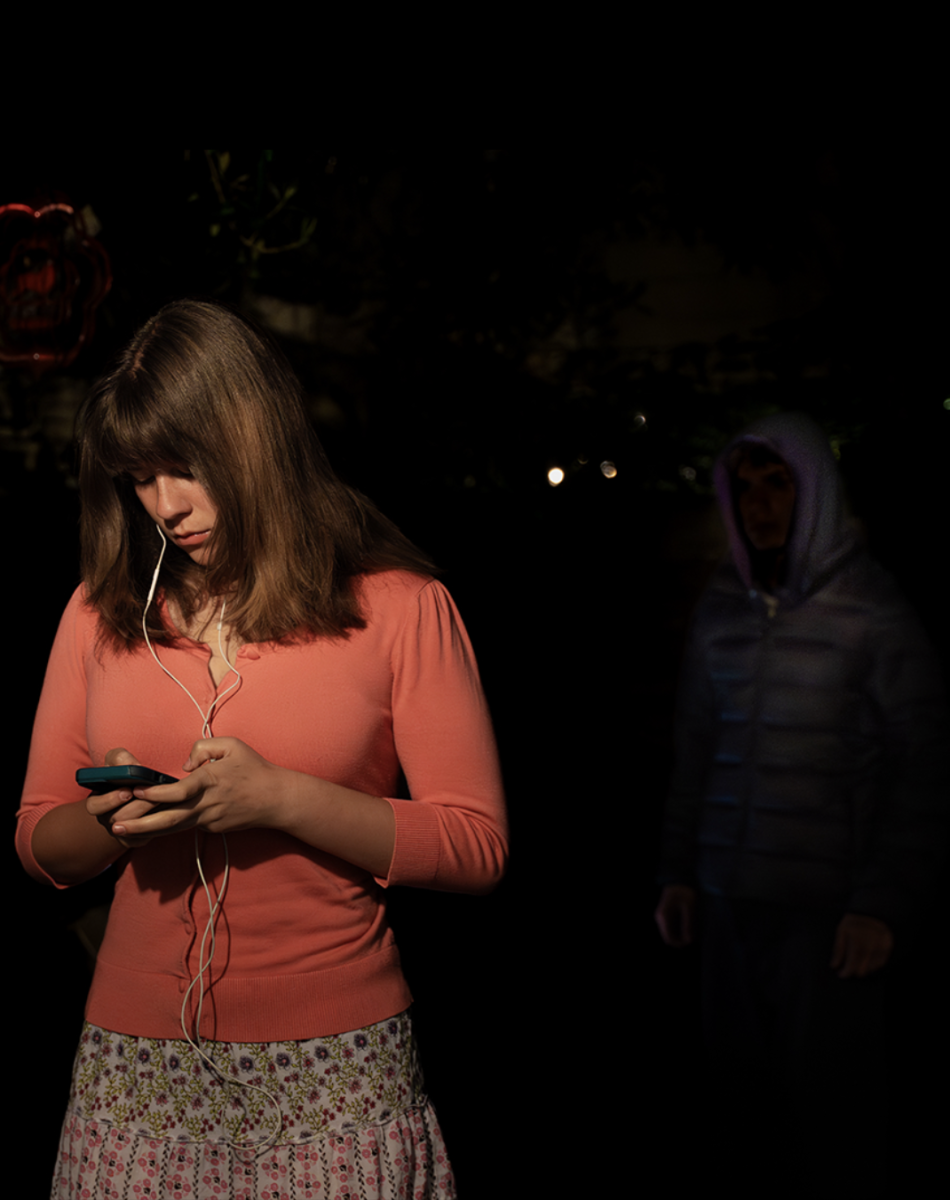


When I was 12, there was a girl in my grade who pretended to have Tourette syndrome. She would laugh and shout out a word in the middle of class, or jerk her head and call someone a slur. I had begun having tics near the start of that year, and watching her and her friends purposefully turn a disability into a form of entertainment hurt me deeply. Oftentimes, people would laugh when I had a twitch, or glare at me and tell me to “stop pretending.” I felt that, due to my tics, I was either seen as a “faker” or singled out for being different. To this day, I am detrimentally affected by others’ perceptions of what tics should and should not look like.
Tourette syndrome (TS) has been becoming an increasingly popular discussion topic online. Around the same time that TS was becoming more widely discussed on social media, I started to experience neck twitches. These have since grown to a variety of small tongue clicks, body movements, and even whole spoken phrases. I also began to curse involuntarily. With years of invalidation and hurtful interactions behind me, I wish to clear up some misconceptions and biases and, hopefully, aid in making Lowell a more inclusive space.
A common misconception is that most people with TS swear or say slurs. This is entirely false. Although some share these symptoms, coprolalia — involuntary and uncontrolled obscene words or gestures — affects less than 10 percent of people with TS. While I do not say slurs, I do sometimes curse or make rude gestures. These are completely out of my control, and are never meant to be offensive or hurtful. They usually cause more harm to me than to others. There have been instances where I’ve cursed in the middle of class on days substitute teachers were present. Too many times, I have had to frantically explain that I didn’t really mean to tell them to F- off, and that it was 100 percent involuntary.
While I can’t control my tics, I can temporarily suppress them. However, this is often uncomfortable and difficult to maintain. Having tics is a bit like needing to sneeze. Sometimes you can plug your nose and hold it in for a few seconds, and other times it surprises you in the middle of silent study hall. In either case, it’s much harder for me to suppress a tic than it is for people to deal with a small disruption.
Not only can I not control when and where I tic, I can’t control what they contain. Sometimes, similar to an annoying song getting stuck in your head, certain words or phrases can get stuck with me. These may be curse words, niche meme references, or random sounds. They can also be entirely unaligned with my actual opinion or thoughts on a situation, and sometimes I say or do things that I don’t agree with.
When I tic, most of the time people think I’m just messing around, making random movements and sounds as the punchline to some unspoken joke. Alternatively, when I haven’t ticked in a while, some people have come up to me accusing me of pretending to have a disorder that I do not possess. This, I believe, is caused by the misconception that people with TS tic constantly. It ultimately just makes me feel hurt, invalidated and exhausted.
Like Autism Spectrum Disorder and other neurodivergent conditions, TS is a spectrum. While some people tic all day, every day, others have short bouts of tics that can cease for a few days at a time. I fall into a middle category, meaning that I tic almost every day, but I can go hours at a time without experiencing them. My tics are often worse early in the morning and late in the afternoon, as I tend to tic more when I’m tired or stressed. This means that in certain classes, you may not notice me tic at all, whereas in others, it’s one of the first things you’ll notice about me.
There is currently no cure for TS. However, I take medication that helps me manage anxiety, which in turn causes me to have fewer tics. I started taking meds in middle school, and have continued ever since. Although they can often be helpful, meds also come with side effects that make me tired and unable to focus at times.
I can’t make my tics go away but there are factors that increase and aggravate my symptoms. These stressors include being around many people, or when people purposely trigger my tic response. Sometimes, people think it’s funny to copy my tics by repeating them in the same tone. This can lead me to tic again and again, not only stressing me out but causing a much bigger disruption. What helps me the most is staying calm and not overreacting to my tics, even if I say something strange.
Everyone with TS is different, and will have different levels of comfort discussing their disorder. I personally enjoy answering questions about my tics, and welcome respectful curiosity. It gives me a chance to educate others about the syndrome, and hopefully clear things up for them if they meet someone with tics in the future. Most importantly, while having TS is a part of my life, it is by far not the biggest part of me, or the first thing I would share if someone asks who I am. I love writing short stories and poetry, own a pet lizard, started my own club, and enjoy studying psychology. If you get to know me as a person, you’ll soon come to realize that tics make up only a small part of who I am. All I ask from you is not to pretend my tics are invisible and understand that they don’t define me.