
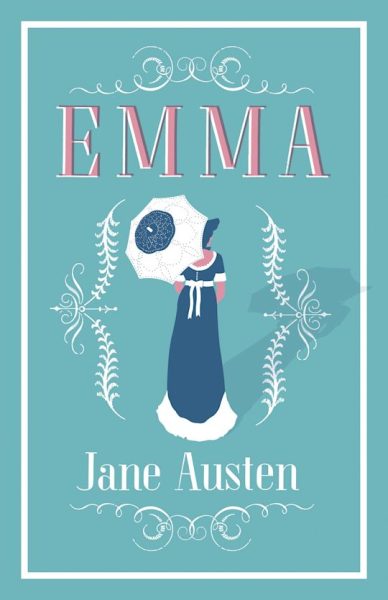
In this enlightened era, we are blessed with an ample supply of media centered around complex female characters. But long before Virginia Woolf called for the necessity of a room of one’s own, Jane Austen wrote Emma, and gave her protagonist, Emma Woodhouse, a whole mansion.
For an unmarried woman in 1815, Emma lives an enviable life. She has plenty of money, an adoring father, and a childlike belief in her own infallibility, which causes her to hurt others despite good intentions.
Throughout the novel, Emma sincerely wants to make people’s lives better. Believing her own friendship to be a vector of great improvement, she decides to take on Harriet Smith, a girl of indeterminate birth, as a project, and manipulates her into turning down a proposal of marriage. Among Emma’s other sins are mocking her elders and giving credence to those who praise her. She leaves paintings half-done, and makes lists of books she means to read but doesn’t. Sometimes she behaves like a regency-era Blair Waldorf: classist and manipulative.
The book doesn’t attempt to disguise Emma’s flaws, but it also emphasizes that she isn’t a bad or irredeemable person. After all, who hasn’t neglected to follow through on their self-improvement plans, or been rude to someone they find annoying? Who hasn’t given a friend unnecessary or unhelpful advice, once in a while? In the end, Emma has to face the mistakes she’s made, and make a genuine effort to change.
Emma’s relatability, even if it’s contextual, refutes one of the biggest criticisms of Jane Austen’s works; that their content is insignificant, detached from both human emotion and world events. Her plotlines largely ignore social issues and contemporary events like the Napoleonic wars. They’re centered purely around upper-class characters. But even though her characters’ life circumstances differ sharply from those of any modern reader, they stand out clearly as people, with a full complement of flaws and foibles that make them just as, if not more compelling than many modern novels written today.
Jane Austen endures not just because of her exquisite writing style, but for her humorous and realistic insights into human behavior. Anyone who calls her work trivial or unapproachable needs to take a closer look at Emma.