
There’s a wistful note in junior Marlena Zuercher’s voice as she recounts some of her most prominent childhood memories. She remembers the earthy, comforting smell of a summer camp she attended when she was younger. When she passes by the park near her house, the gleeful shrieks of children remind her of the good times she had running around the playground. These memories bring Zuercher back to a happier time, when she felt less constrained by the stresses and pressures of the real world.
She isn’t alone in her experiences. Both Lowell students and teachers look back on the past and reminisce on fond memories. In an anonymous survey conducted by The Lowell in Jan. 2026, 67 of 93 respondents (72 percent) indicated that they wish they could relive a previous time period in their life. Often, phrases like “back in the good ol’ days” are associated with an older generation. But nostalgia, defined as a sentimental longing for the past, is a common aspect of the human experience, regardless of age.
The concept of nostalgia was first coined in 1688 by Johannes Hofer as “a state of moral pain associated with the forced separation from family and social environment” (National Institutes of Health, Nostalgia: a conceptual history, 2014). Its current meaning is closer to the definition of homesickness, a strong desire to return to one’s homeland (Brittanica, Nostalgia, 2025). Personal nostalgia, defined by psychologist Dr. Krystine Batcho on the 93rd episode of 2019 podcast “Speaking of Psychology” from the American Psychology Association (APA), is “the notion of longing for or missing aspects of a person’s personal lived past.” She describes nostalgia as a connection between emotional experience and identity, aspects that constantly shift in a person’s life.

At the same time, Batcho paints nostalgia as a bittersweet emotion, combining happiness from fond recollections with the sadness that comes with leaving them behind. According to the May 2022 journal “Patterns of brain activity associated with nostalgia: a social-cognitive neuroscience perspective” from Oxford Academic, these feelings can be activated through any notable stimulation of the five senses, including interactions with certain objects and events, odors and tastes, music, or emotional connections to others, particularly from childhood or youth.
Recently, there’s been a resurgence of interest in the year 2016 online. Countless videos on social media platforms like Tiktok and Instagram proclaim that “2026 is the new 2016,” paired with songs reminiscent of the year and featuring fashion and gadgets similar to those popular a decade ago. But why the renewed obsession with fidget spinners and pastel filters? In the 2026 BBC article “Rose-tinted filter: Why 2016 is taking over social media in 2026,” psychologist Clay Routledge shared two possible factors contributing to the new obsession: the general start of a new year, and the uncertainty that many young people feel of their futures, with the nostalgic fixation on the past focusing on important “markers” in people’s memories. “Maybe people just want a change,” sophomore Shiloh Wade commented. “Maybe people just want to – [not] slow it down, but just take a step back and go back to better times.”
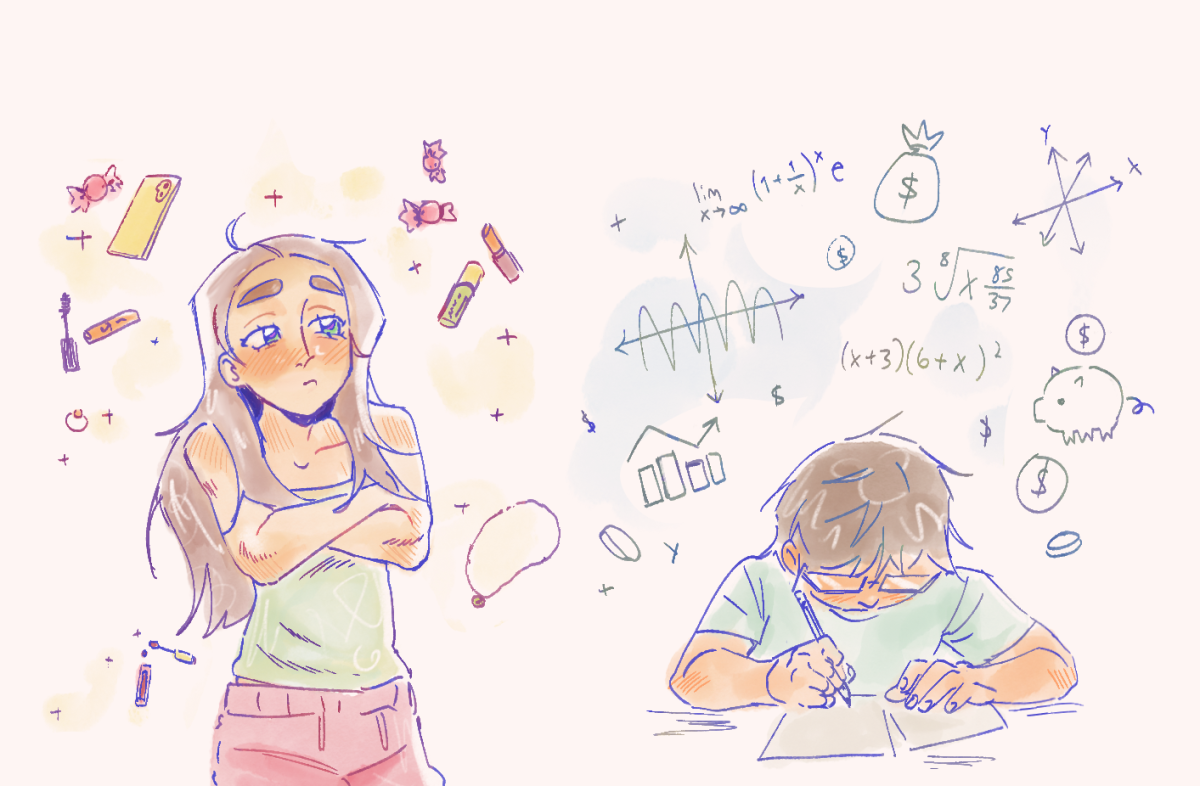
Despite the relatively young age of Lowell students, many miss the carelessness experienced as children. Zuercher feels that constantly hearing about colleges and internships adds to a sense of growing up rapidly. “I don’t necessarily think that 2016 was actually all that, but I [understand] the feeling of going back to a time where everything wasn’t so stressful,” Zuercher explained. “I feel like in general, that was a time when I didn’t really have to worry about anything.” Senior Maxine Cho echoed these thoughts, saying that she thinks people want to return to a time of ease. “Before COVID happened, everything kind of seemed like it was on a smooth track and people really enjoyed that,” she said.
Many Lowell students have joyful and sentimental past experiences to share. Wade said that he associates the activity of painting with his youth.“[Painting] is a very nostalgic thing, especially because there’s a lot of representation of art when you’re younger, like finger painting,” Wade said. He added that he had recently tried finger painting again and enjoyed it . Some of senior Jason Feng’s strongest childhood memories are of playing soccer with his friends and grabbing Subway after practices with his dad. To him, the connection he’s created with loved ones is what stands out about those recollections. “I just enjoy the time hanging out with my friends…and spending time with my family, especially with my dad. [Time] after soccer is one of the great memories I have of him,” Feng said.
Reminiscing can also be triggered by more somber moments. Feng has often thought about the past whenever he needs positive reinforcement, such as when he performed poorly in a soccer match. “Sometimes, when I am feeling down, I always think about the past,” Feng said. “I would always ask myself why I started to play soccer: for the love of the game. [I would] try and get myself hyped again.” Cho describes herself as having a ‘witching hour’, when she becomes gloomy around sunset. “I get really sad and mopey because I’m like, ‘oh, the day’s gone by’. Then, I normally start thinking about things I wish I paid a little more attention to and wish I could go back and redo.” She recalled an old blue dress she treasured.

“It was part of one of those princess sets with the really clacky high heels…and I remember not ever washing it,” she said. To Cho, the dress represents a time that she wishes to relive. “I feel like I could have experienced it to its fullest rather than taking it for granted, because now that the blue dress time has passed, I wish I remembered the feeling of being in it.”Cho’s experience matches what Batcho suggests in her research: that people find comfort in longing for the past because while the future is uncertain, the past gives people an understanding of who they are and the experiences that shaped them. “Change threatens us,” Batcho says. “It’s a little frightening because we’re not 100 percent sure that we can control it.”
For math teacher Conrad Chu and social studies teacher Matthew Furey, nostalgia reflects a greater appreciation for the times they’ve lived in. Chu spoke fondly of playing Pac-Man in video game arcades as a child. “If I see someone wearing a Pac Man T-shirt, I’ll think, ‘that’s really nostalgic’, because when I think about that, it brings back some good memories,” he said. Furey described how he and his brother recently played Nintendo games from their childhood together. “We play for an hour, [then the feeling] kind of wears off, but we reconnect with our younger selves by playing these video games that we really loved,” Furey said. “I find nostalgia to be a really important part of your identity, because you remember… what helped make you who you are. My childhood memories make me realize how much I love my city…how much I love my community.”
Batcho’s research suggests that most experiences with nostalgia are associated with healthy coping mechanisms, and that it’s uncommon for someone to truly feel stuck in their past. “When we revisit our memories, we try to remember how other people in our lives solved problems in the past and then use [those experiences] as a role model for how we want to solve the problems we’re experiencing today,” she says. Additionally, her research shows that most nostalgic yearning occurs during transitional periods, like from childhood to adulthood – which many Lowell students are currently experiencing – and shifting into retirement, instead of reminiscing increasing over time as one ages (Nostalgia: A Psychological Perspective, 1995). “We change constantly. Motivating us to remember the past in our own life helps to unite us to that authentic self, and remind us of who we have been and then compare that to who we feel we are today,” Batcho said.

Even as they look to the past for comfort, Lowell students still anticipate the future. The Lowell‘s survey revealed that 43 of 93 respondents (46 percent) look forward to growing up. One anonymous respondent wrote, “I learn from the past, live in the present, and plan the future. I’ve learned a lot from the mistakes I’ve made, and I’ve had incredible experiences, but I want to see what the future will bring.” Feng reiterated a similar idea, saying that while he’ll miss what he’s already experienced, he’s excited to live in the present and see what comes next. “I’ll for sure miss it,” Feng said. “I made lots of great memories…and I really appreciate the time that I…got to live and experience. [But] we shouldn’t just keep living in the past, [we should] look forward.”